
Destination
Paleobotany and Palynology in Calgary
Palaeobotany
Palaeobotany in Canada has a rich history that predates Confederation. Foundational work on fossil plants was initiated by J. William Dawson with his landmark book, Acadian Geology, in 1855. Dawson’s research into early land plants of eastern Canada earned him recognition as “The Father of Devonian Paleobotany”. Interest in the country’s fossil plants then emerged alongside the geological exploration of British North America during the mid- to late-nineteenth century, as the abundant coal deposits of both eastern and western Canada fueled emergence of the new country. The influential work of Dawson, and his student David Pierce Penhallow, was facilitated by the nation-wide geological surveys of his son, George Mercer Dawson, who became Director General of the Geological Survey of Canada (GSC).
Extensive collections made during the expeditions of G.M. Dawson established Canada’s British Columbia, Alberta, Saskatchewan, the Yukon, and the Northwest Territories as significant resources for Mesozoic and Cenozoic palaeobotany. These collections supported subsequent systematic research, initially by Penhallow, who introduced a more rigorous botanical approach to the discipline, emphasizing comparative morphology, anatomy, and taxonomy, then most notably carried out by Walter A. Bell of the GSC.
Following Bell’s thorough documentation of western Canadian Mesozoic and Cenozoic fossil plants, the notable arrival of Wilson N. Stewart at the University of Alberta in 1966 established a paleobotanical legacy that continued with the appointment of Ruth A. Stockey in 1979.
In eastern Canada, the study of Devonian plants pioneered by Dawson was continued during the twentieth century most notably by Henry N. Andrews Jr. (University of Connecticut) and Patricia G. Gensel (University of North Carolina). Their work, particularly on fossil floras from New Brunswick and Quebec, documented some of the earliest vascular plant communities in North America.
The rich Carboniferous floras of eastern Canada were also the focus of extensive work by Erwin L. Zodrow (Cape Breton University), who spent much of his career studying the Pennsylvanian plants of the Sydney Coalfield in Cape Breton, Nova Scotia.
Today, palaeobotany remains an active field of research in Canada, continuing a tradition that extends back more than 170 years. Ongoing work on Canada’s extensive fossil plant record, including the Cretaceous and Paleogene floras of Alberta, spanning the K–Pg boundary, and the rich Paleogene floras of British Columbia, continues to document the history and evolution of vegetation across the country, ensuring that the long legacy of Canadian palaeobotany remains very much alive.
Palynology
While J. William Dawson’s comprehensive early works included some illustrations of fossil spores, palynology per se emerged in Canada much later, after Scandinavian palynologists pioneered pollen studies in Ontario and Québec peatlands in the late 1920s. Prominent academics such as Jaan Terasmae (GSC, Brock University) and James (Jim) C. Ritchie (University of Toronto) developed pollen analysis in the mid-20th century, tracking glacial and interglacial events in Eastern Canada. Quaternary palynology considerably expanded across Canada since the 1970s with the outstanding contributions of the likes of Pierre Richard (Université de Montréal) and Rolf Mathewes (Simon Fraser University) who both trained many students.
In the years following World War II, a strong focus on stratigraphic palynology developed in Western Canada, where many specialists originally trained in the United Kingdom grew roots. Most marine palynologists around the world are familiar with the authoritative taxonomic, nomenclatural and stratigraphic works of William (Bill) A.S. Sarjeant (University of Saskatchewan) and GSC palynologists Graham L. Williams and Robert (Rob) A. Fensome who called Nova Scotia home.
In Alberta, palynology developed alongside the petroleum industry during the mid-20th century. As oil and gas exploration expanded across the Western Canada Sedimentary Basin, palynologists became essential for determining the age of rocks, correlating subsurface formations between wells, and reconstructing ancient depositional environments. Although primarily known as a stratigrapher and micropaleontologist, Charles R. Stelck (University of Alberta) introduced and promoted palynology as a biostratigraphic tool in western Canada and helped establish the scientific environment from which Alberta palynology grew. Leonard (Len) V. Hills is credited for expanding the discipline in western Canada, having mentored an entire generation of palynologists in his long career at the University of Calgary. Several prominent palynologists of GSC–Calgary (then known as the Institute of Sedimentary and Petroleum Geology) such as Wayne W. Brideaux and Arthur (Art) R. Sweet are credited for having laid out much of the palynological taxonomic and stratigraphic framework of Cretaceous and Cenozoic strata in western and northern basins.
Beginning in the late 1980s, palynology in Alberta evolved from a petroleum exploration tool into a multidisciplinary science that links paleontology, stratigraphy, climate reconstruction, environmental monitoring, and resource development. Today, Alberta remains a stronghold for palynology, where academia, government institutions and museums lead interdisciplinary research on stratigraphic correlations in Canada’s vast frontier basins and beyond, Mesozoic to Quaternary paleoenvironmental reconstructions, paleobiology, paleoecology, and archaeology.
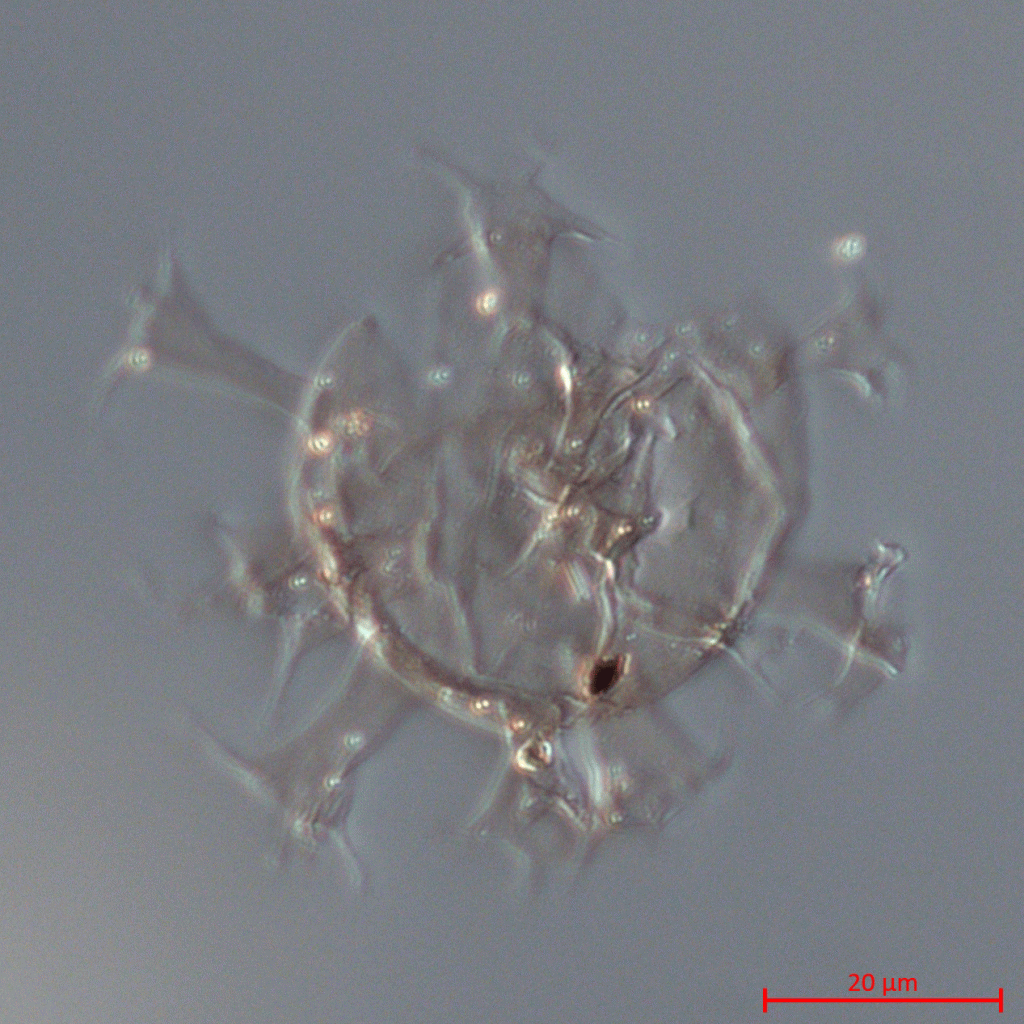
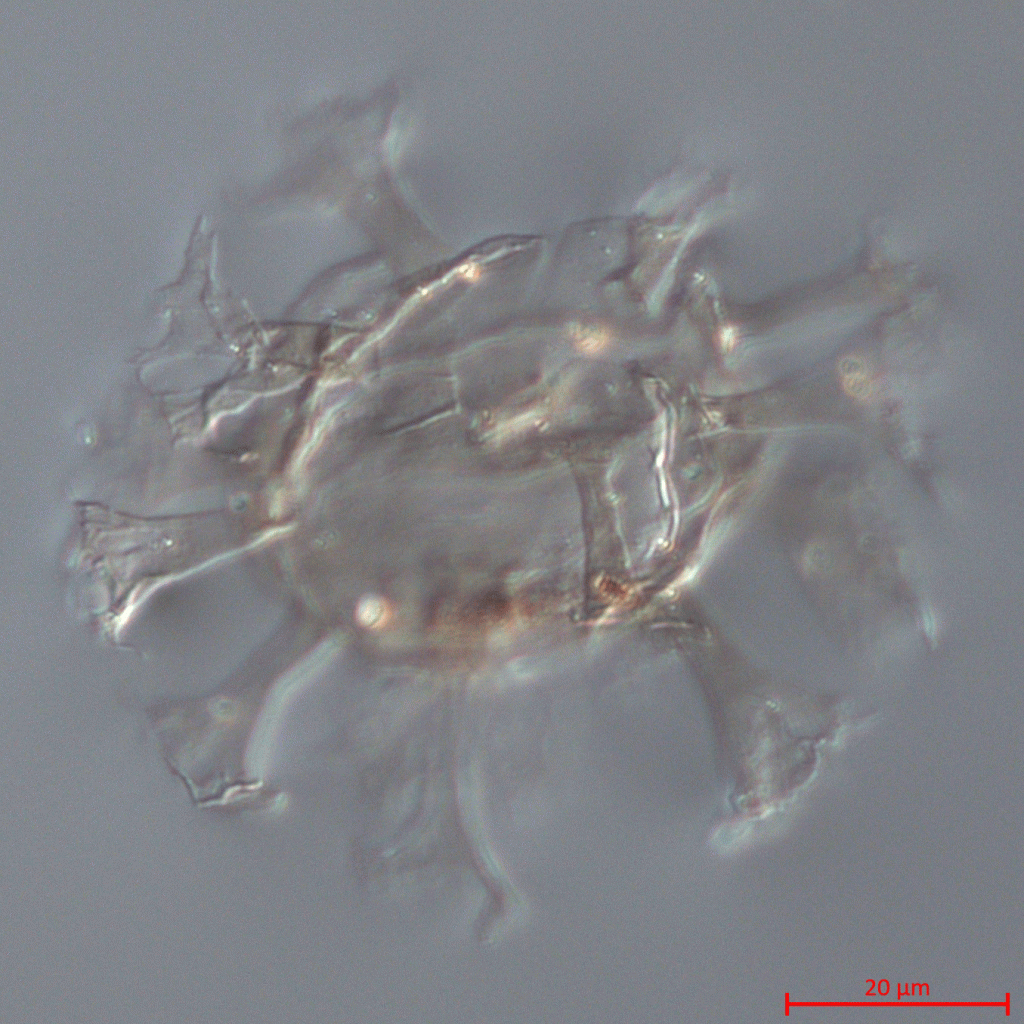
Oligosphaeridium albertense is dinoflagellate cyst species originally described (as Hystrichosphaeridium) in 1962 by Stanley Pocock from wells in Alberta and Saskatchewan. This specimen was recovered from a core in the Albian (Lower Cretaceous) Skull Creek Member of the Ashville Formation, Manitoba, Canada.
About Calgary
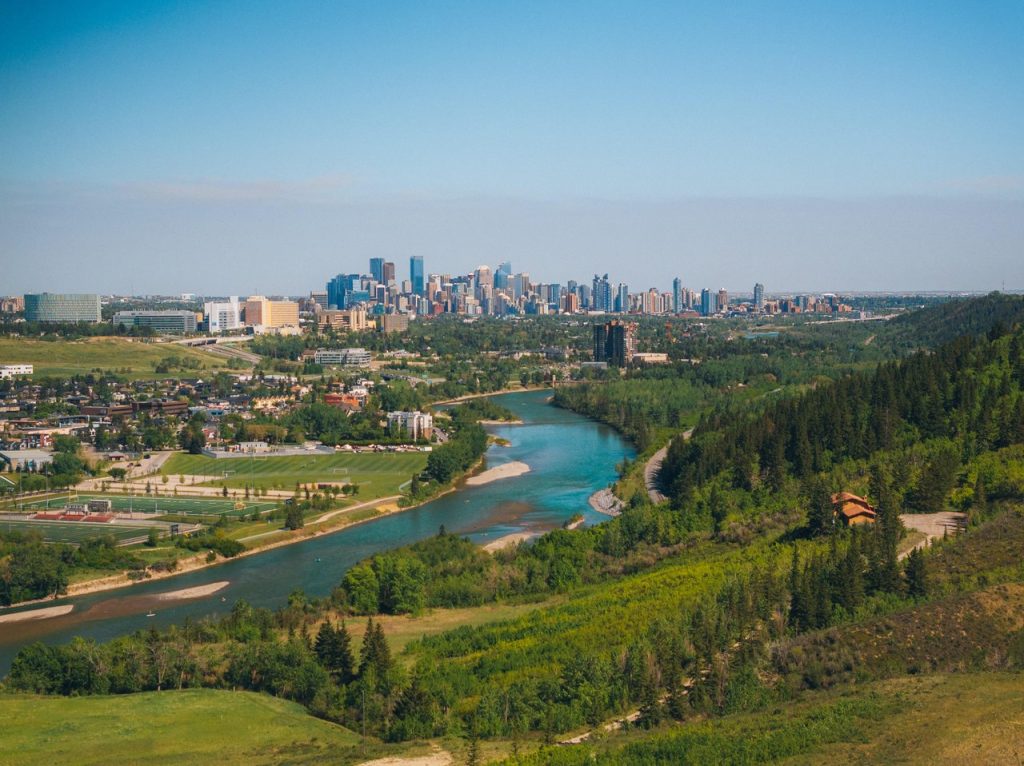
Calgary is situated near the spectacular Rocky Mountains which correspond to a fold and thrust belt on the eastern side of the Canadian Cordillera, and on the western side of the vast expanse of the Canadian prairies, which are the surface expression of the Western Canada Sedimentary Basin. Calgary is a vibrant and welcoming city that combines the amenities of a modern urban centre with easy access to some of Canada’s most spectacular natural landscapes. Visitors can explore a thriving arts and cultural scene, diverse restaurants, extensive pathway networks, and numerous parks and green spaces. Located less than an hour from the Rocky Mountains, Calgary also serves as a gateway to world-renowned destinations such as Banff and Dinosaur Provincial Park.
There are five UNESCO World Heritage Sites with geological significance within an easy day trip from Calgary. Writing-on-Stone Provincial Park contains thousands of petroglyphs in 50 locations dating back over 5,000 years. Dinosaur Provincial Park preserves exceptional fossils representing over 50 types of dinosaurs, in addition to its excellent riparian habitats and beautiful badland landscapes. Head-Smashed-In Buffalo Jump is located where the Foothills of the Rocky Mountains meet the Great Plains. It is one of the best-preserved and largest buffalo jumps and includes an impressive museum depicting the cultural significance of the site to the Blackfoot First Nation. The Canadian Rocky Mountain Parks, comprising Banff, Jasper, Kootenay, and Yoho National Parks, together with Mount Robson, Mount Assiniboine, and Hamber Provincial Parks, encompass some of the most spectacular mountain scenery in North America.
The region is also home to the world-famous Burgess Shale, whose extraordinarily preserved fossils have transformed our understanding of the early evolution and diversification of animal life. Waterton-Glacier International Peace Park spans the Canada–United States border and combines Waterton Lakes National Park in Alberta with Glacier National Park in Montana; it is renowned for its dramatic mountain scenery, pristine lakes, unique geology, abundant wildlife, and exceptional biodiversity.
Discover attractions, dining, events, and local experiences to make the most of your time in Calgary!